 Wine Chronicles
Alsace’s “classic” harvest in 2014
Posted on October 4, 2014

Seems to favor fresh styled dry wines, and could be great for crémant
By Panos Kakaviatos in Strasbourg
2014 looks to be a “classic vintage” with high acidities and good ripening especially for Riesling and Pinot Blanc, reported Olivier Humbrecht of Zind Humbrecht in Turckheim, who finished harvesting in late September at his precocious vineyards.
A fresh and cool August helped maintain acidity as in 2007, Humbrecht remarked.
While June and July were hot, August was fresh and rainy and thus good for maintaining acidity, but it also meant that sensitive grapes like Gewurztraminer had more difficulty to deal with botrytis, he explained.
In Rouffach at Domaine Muré, Thomas Muré on 3 October echoed Humbrecht’s assessment. He reported fine ripeness and freshness for Riesling, Pinot Gris, and Sylvaner with lower than average potential alcohol, which he prefers. The domain’s celebrated Riesling Clos Saint Landelin will be about 12.5% and not at 13.5% he said.
Readers may think that “classic” is code for mediocre, but that is not what I mean in this text. From what I have heard, the vintage could result in fresh and pure Riesling, which sounds good to me. It is said in Alsace that Riesling likes its feet in the water and head in the sun. Sounds like 2014 to me. On the other hand there were challenges, so read on …
Salt of the earth: discovering Portuguese culinary ease
Posted on September 18, 2014

18 September 2014
By Panos Kakaviatos for wine-chronicles.com
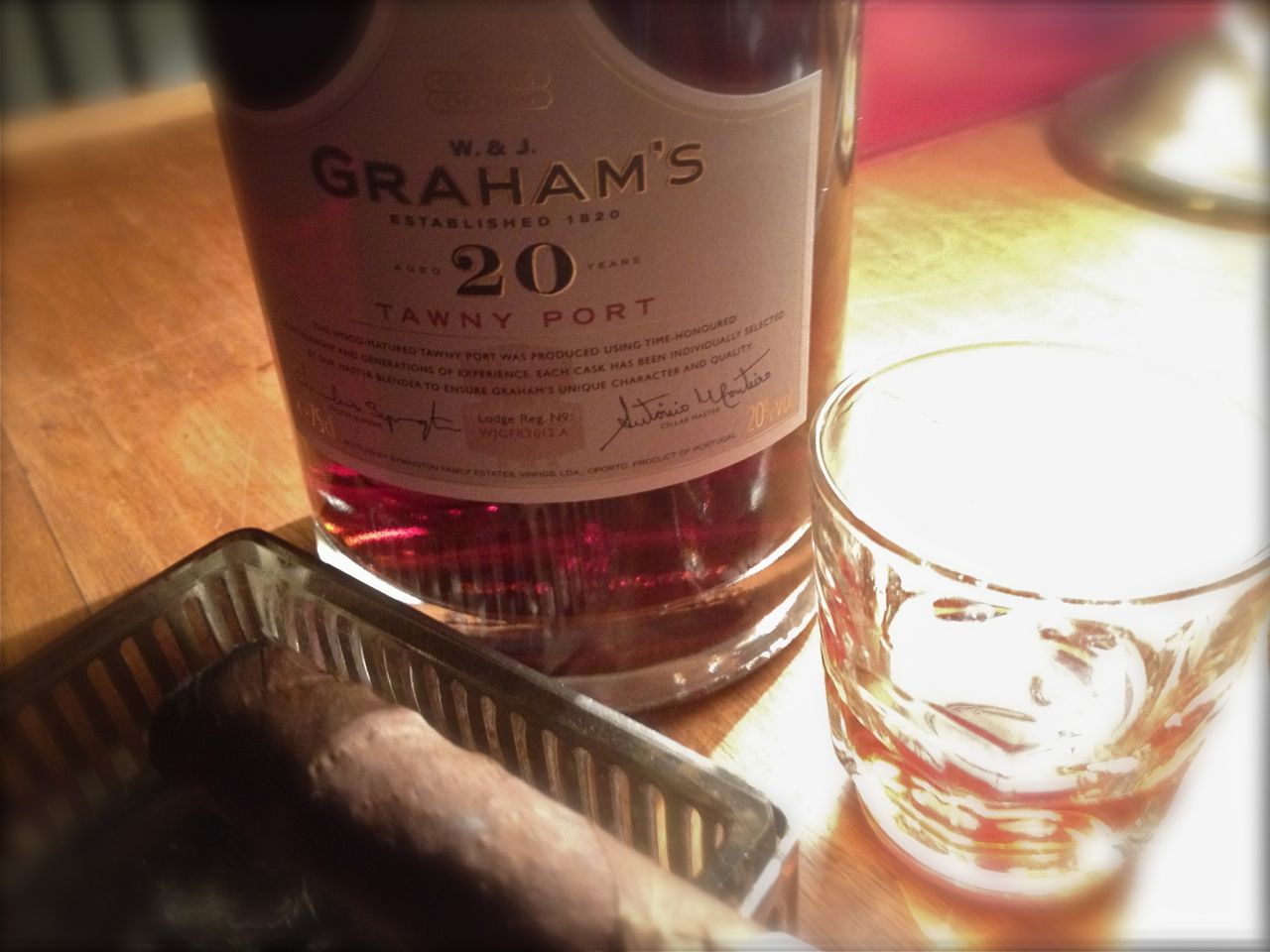
I’m drinking 20-year-old Tawny Port and smoking a just decent enough Cuban as I write this after dinner feeling like worn out nobility. But I bought the bottle at the Lisbon airport before leaving Portugal and was truly impressed by the choice of Ports – and dry wines – that flyers could take home with them. I could have picked something more interesting like a Colheita but I was not sure about the 1999 or 2005 vintages available, so a 20 year old Graham’s proved to be a sure fire success. And I was in the mood for Tawny.
And why not?
French foires aux vins use Parker points as sales points
Posted on September 12, 2014

By Panos Kakaviatos for wine-chronicles
It is that time of year again in France when supermarkets and chains – and, increasingly – wine boutiques are holding sales for wines in the twice a year foires aux vins or wine fairs. Typically, the featured wines are Bordeaux, many from en primeur campaigns that went bust. Plenty of 2011s out there, for example, for the same price as they were en primeur, begging the question why bother with en primeur, but that’s another article.
Instead of going to a major supermarket chain like Auchan or LeClerc, I opted for the mini U boutique on my street in Strasbourg. The Super U is yet another major supermarket chain but its mini boutiques are run like franchises with a more limited selection, but not the same necessarily as the mother ship. And I have gotten to know the wine buyer there who kindly invited me to try some wines on sale at an evening tasting.
Contextual concerns in blind tasting
Posted on August 29, 2014

29 August 2014
By Panos Kakaviatos for wine-chronicles.com
Blind tasting at an international contest as comprehensive as Mundus Vini can be a daunting task. For five days in a row, judges fly to Germany from all over the world. They get up at 6:30 am in order to taste wines from 8 am until about 1 pm. Fortunately, the organization is excellent and so are the scores of professional judges with whom I had the honor to taste.
Over 4,400 wines from some 40 countries around the globe are being evaluated over a five-day period (27-31 August 2014) under impeccable conditions: all the needed space to taste comfortably, fine glassware, attentive service, strategically placed and discrete spitting buckets de rigueur, proper temperature for both wines evaluated and in the expansive tasting room of the elegant Saalbau Neustadt an der Weinstrasse building, and excellent pacing with well-timed breaks between flights. Organizers took the somewhat controversial decision to remove WIFI so that we could better concentrate, but that did not prevent people from clicking on their 3Gs… A minor detail.
Blind tasting pitfalls
More important for this blog entry: no matter how well organized the event, blind tastings can have “issues”. Take for example (1) understanding context and (2) knowing the prices of the wines.
Place over grape: making wine waves in Southern Styria (p. 2)
Posted on August 28, 2014

Blind proof
By Panos Kakaviatos for wine-chronicles
After discovering the general lay of the land thanks to Tamara Kögl in part 1 of this blog, a blind tasting organized the day of the World Cup Final between Germany and Argentina by Michael Gross of Weingut Gross revealed to me a thing or two about wine – and preconceived notions.
Nestled among the hills of the Southern Styrian wine country, the Gross Winery is situated on the Ratscher Nussberg, one of the top vineyards in the region – and one can understand a progression towards terroir emphasis by just looking at how Michael and his family have changed the labels of the wines, to the point where next year, for example, the name of the grape – Sauvignon Blanc – will only appear on the back label, with Nussberg being the way to identify the wine.

As a member of the Steirische Terroir- und Klassik Weingüter group “STK” the winery sets great value upon the vinification of regionally typical Styrian wines. The “STK wineries” date back only to the 1980s, an indication that such attention to terroir and quality is a recent phenomenon.
Recent Comments