 Wine Chronicles
What’s in a Name?
Why wine origin still matters
By Panos Kakaviatos for Wine Chronicles
27 December 2025
Every so often, the wine world is reminded that names are not neutral. They carry weight, memory, and meaning that must be defended.
Just before Christmas, Burgundy’s trade body, the Comité des Vins de Bourgogne, intervened after a major discount retailer aired a radio advertisement promoting a low-priced wine from the IGP Pays d’Oc. The advert praised the wine by evoking “this Burgundian grape with hazelnut aromas”, a formulation clearly designed to borrow the reputation of Burgundy while selling a wine with no geographical or cultural link to it. Within days, the campaign was withdrawn.
At first glance, this may seem like an overreaction. After all, Chardonnay is grown worldwide, right? From Napa to New Zealand, by way of Germany to South Africa. But Burgundy’s response was not about a grape name. It was about origin, precision, and the protection of a system that gives wine its meaning.
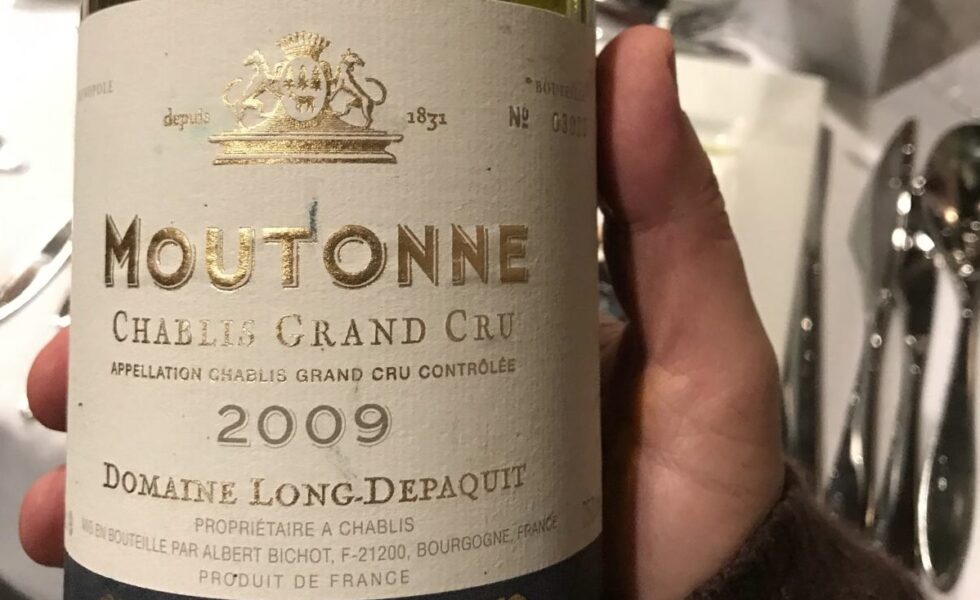
Take the bottle illustrated here: Chablis Grand Cru La Moutonne 2009, Domaine Long-Depaquit. Yes, it is Chardonnay — but that is only the beginning of the story. It is Chablis, a distinct appellation within Burgundy. More than that, it comes from a single, historic Grand Cru vineyard site, La Moutonne, uniquely positioned between Les Preuses and Vaudésir, and long recognised for its singular expression. Domaine Long-Depaquit, based in the heart of Chablis, farms some 65 hectares, including five Premier Crus and five Grand Crus, each with its own identity, exposure, soils, and voice.
This is what the appellation system exists to protect: not abstractions, but layers of specificity. Place within place. Within place! Climate, slope, geology, history, human interpretation. Burgundy is not Burgundy because it grows Chardonnay; it is Burgundy because Chardonnay grown there tastes like nowhere else.
When a mass-market wine uses Burgundy’s reputation as a convenient flavour cue, it flattens all of this complexity into a marketing shortcut. That is why the Burgundy Wine Council reacted so strongly. It was not out of arrogance, but out of necessity. Once meaning is diluted, it is difficult to restore.
The same logic applies beyond Burgundy. Champagne is not a synonym for sparkling wine. Porto is not a style descriptor. Barolo is not a generic red. These names are legally protected because they correspond to real places and collective histories. They also protect the consumer, who has every right to expect that a reference to a region implies more than a vague stylistic suggestion.
In an era when wine is increasingly marketed like any other fast-moving consumer good, the temptation to “borrow” prestige remains strong, especially at the lower end of the price spectrum. But prestige in wine is not decorative. It is cumulative and shared.
So yes, this was only a radio advertisement. But it serves as a useful reminder: in wine, names still matter. They matter because behind them lie vineyards like La Moutonne, and thousands of others, whose identity depends on respect for origin, without which wine becomes just another beverage.
Share This