 Wine Chronicles
Over 20 years of tasting together
First growths and more, including 1966 vintage Port
By Panos Kakaviatos for Wine Chronicles
17 January 2026
Some dinners are memorable for the bottles. Others linger because of the company. Few manage both, while reminding you why you started cellaring wine in the first place.
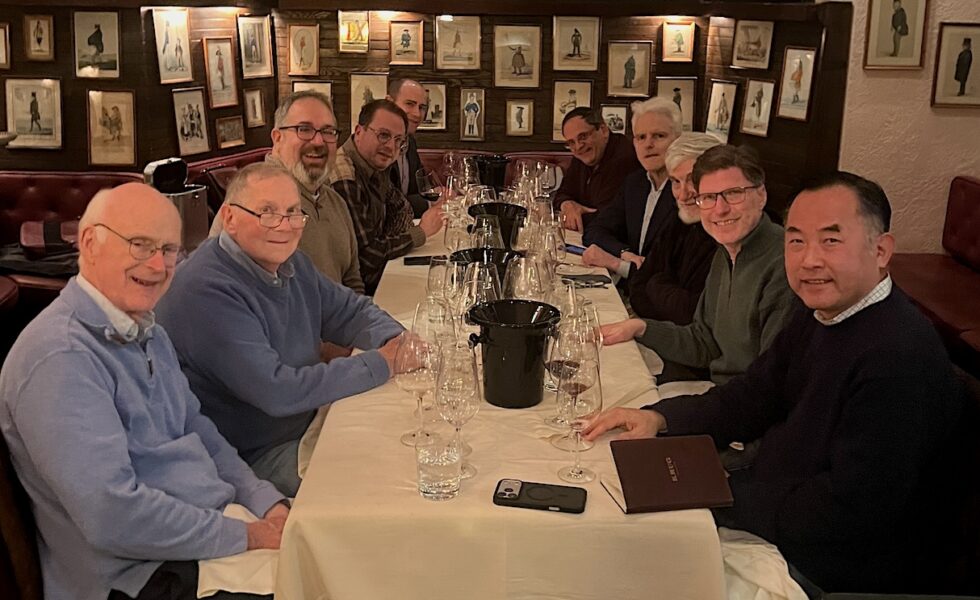
At 1789 in Georgetown, ten friends gathered for a bring-your-own dinner that quietly marked over two decades of shared tastings in Washington D.C. We had met at many restaurants for wine dinners, some no longer existing, others thriving. No theme was formally announced, this time, yet the evening naturally gravitated toward top-tier Bordeaux, framed by serious Champagne at the outset and dignified sweetness at the close. Each guest arrived with a bottle or two, trusting the table, the food, and the accumulated experience of years spent opening wines together.

Chris Bublitz, who brought the 1966 Port, and Kevin Shin, who brought the 1979 Ausone
The restaurant played its role perfectly. Service was attentive but never intrusive; pacing was calm, unforced, and clearly attuned to the demands of mature bottles. The kitchen showed admirable restraint, allowing the wines to lead rather than compete.
Opening the evening, Domaine Les Monts Fournois “Montagne” 2013 offered a fascinating interplay between freshness and gentle oxidative complexity. The Comtes de Champagne Taittinger Rosé 1996 at first had some musty aspects that quickly dissipated to reveal soft elegance, tertiary aspects combined with strawberry. I liked the wine increasingly – and by the time most guests had left, I tasted it again and loved it! The Krug Vintage 1995 followed with authority: architectural, powerful, and unapologetically structured before an excellent Grand Cru Robert Weil Riesling Kiedrich Gräfenberg 2021 bridged the transition into reds, pairing seamlessly with the Wagyu tartare combined with black garlic aioli, quail egg and dill. Crisp Rheingau Riesling clarity proved an excellent balance to the steak.
The Bordeaux sequence told a story of time and truth.
Château Ausone 1979 charmed aromatically despite its modest length. It reflected a bygone era when Pascal Delbeck ran winemaking at this storied Saint Emilion. Robert Parker never liked the wines crafted by Delbeck, but this 1979 stood the test of time, pairing especially well with the truffle risotto. We had much anticipation from the Lafite Rothschild
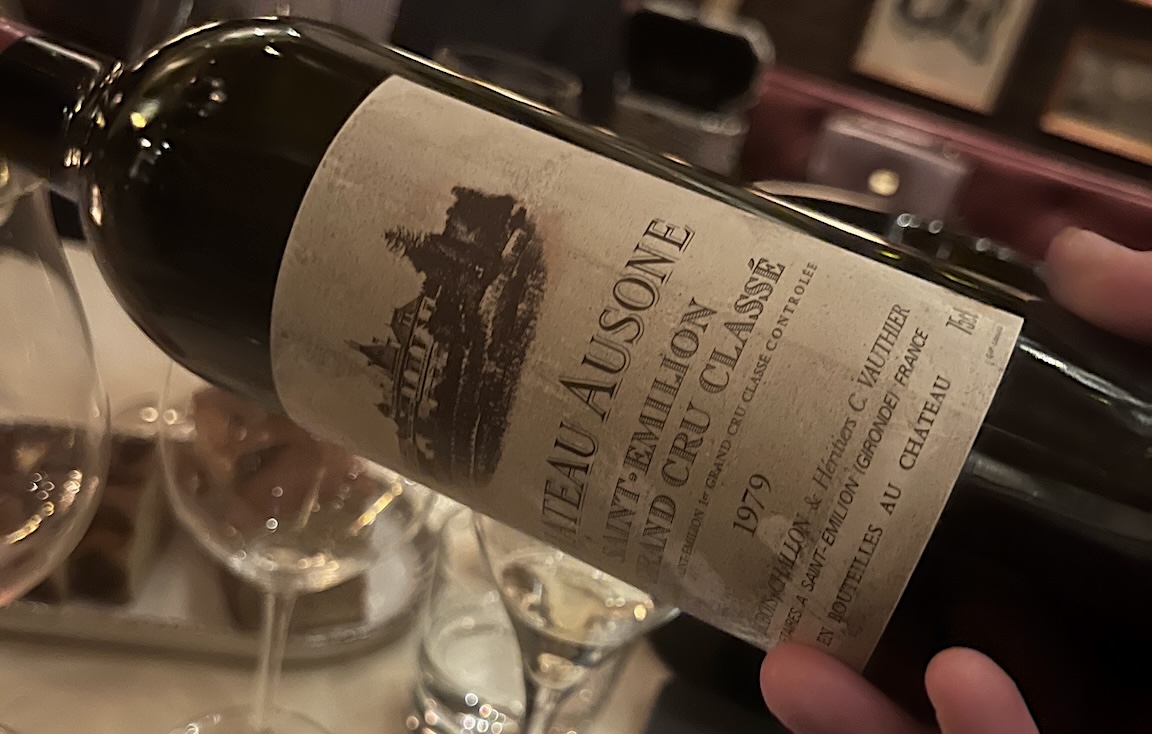 1976, but it had sadly passed its moment, while the Château Ausone 1999 showed youthful richness and promise, reflecting an oakier style four years into the Vauthier era. I did not particularly like it, as later showings from Vauthier are better balanced between oak and ripeness, but still an excellent wine. A blind Montelena Cabernet Sauvignon 1997 surprised many, mistaken for Spain, yet proving its classical Napa credentials. Kevin Shin was – as ever – on the ball here, noting less acidity than an Old-World wine. It was very enjoyable, and logic should have led us to guess: 1976 Judgment of Paris, and here we are in … 2026!
The second red flight sharpened distinctions: Château Latour 1995 – blending 74% Cabernet Sauvignon, 22% Merlot 22%, 3% Cabernet Franc and 1% Petit Verdot – impressed with poise, coming across more supple than powerful, and thoroughly enjoyable! The 1995 vintage was sometimes a mixed bag in Bordeaux, welcome after several tough vintages (1991, 1992, 1993, even 1994), but Latour proved superb.
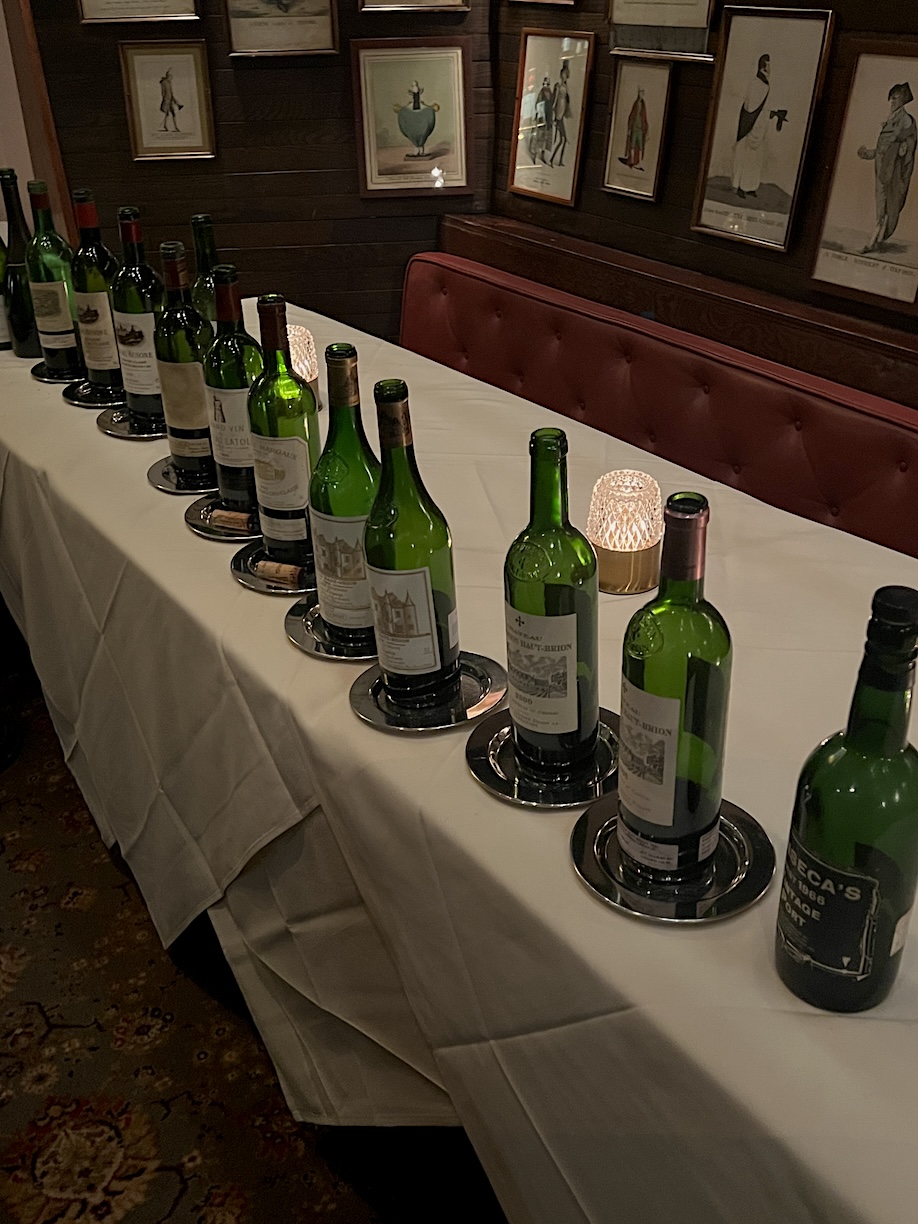
Quite a lineup!
Château Margaux 1999 emerged as a model of seamless elegance. I had enjoyed another bottle of this same vintage but two weeks earlier, and this bottle proved just as good! Deep red, it opens with black currant and blackberry, accentuated with floral aromatics and licorice. More fill than medium-bodied, I really liked the precision and depth of the wine, balancing acidity and richness – almost effortlessly – with not yet fully resolved tannins (good for future cellaring) that exude seamless texture. Long finish. Although I could just enjoy this wine alone, it paired nicely with the New York Strip and purée of potato.
Graves, with no less than four wines from Domaine Clarence Dillon, delivered an emotional summit. Château Haut-Brion 1995 was linear and intellectual – a very good wine that split opinions over dinner – but most agreed that the 1998 proved transcendent: minty, smoky, refined, and resonant. Château La Mission Haut-Brion 2000 rivalled the greatness of the 1998, reflecting more coiled-in power plus elegance. Along with the Haut Brion 1998, the wine of the night, perhaps just a bit better than the Margaux 1999. As for the La Mission Haut Brion 2005, it remains a study in patience – and a great wine in the making!
The evening closed with a magnificent Fonseca Vintage Port 1966. The brown rim reflected its nearly 60 years, but it tasted more youthful than the years would suggest, still reflecting touches of damson and red berry fruit, along with far more pronounced tertiary notes of orange peel, dry fig, subtle spices – and, especially, fine espresso. The overall impression is that of a refined and composed wine that also is deeply expressive. It paired well with the cheeses but honestly, just drinking it on its own offered much pleasure. It was followed by a radiant Haart Piesporter Goldtröpfchen Beerenauslese 2015.
This was not a night of trophy hunting. It was a night of listening: to the wines, to time, and (especially) to friendship. Such evenings remind us why wine matters.
Share This